
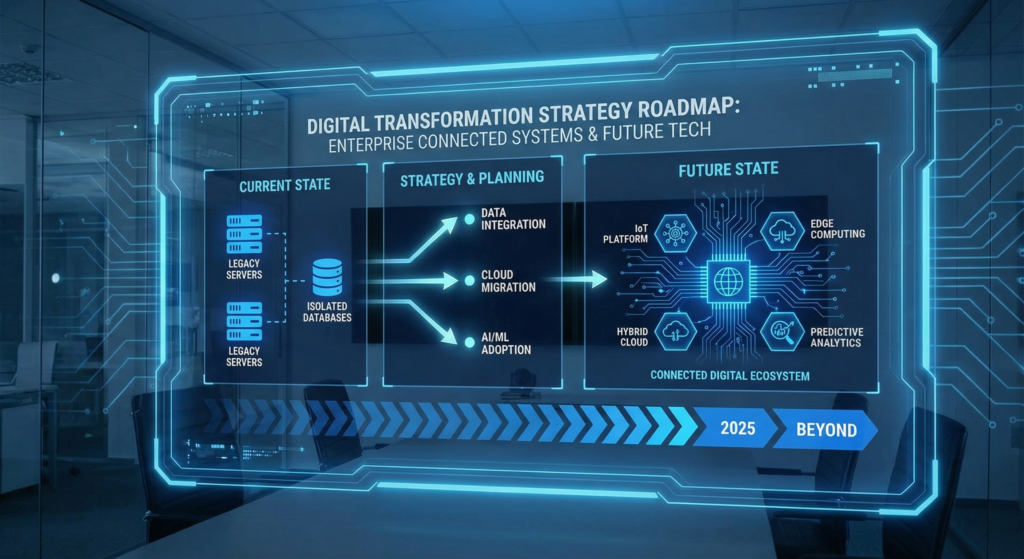
Digital transformation is one of the most overused phrases in business. It means different things to different organizations, and that ambiguity has led to billions of dollars in failed initiatives that generated reports but not results. A transformation that actually changes how an organization operates requires more than technology purchases. It requires a clear strategy, executive alignment, a realistic implementation roadmap, and a culture that can absorb change at the pace the strategy demands. This guide covers how to build a digital transformation strategy that produces measurable outcomes in 2026.
What Digital Transformation Actually Means
Digital transformation is the process of integrating digital technology into all areas of a business in a way that fundamentally changes how the organization operates and delivers value to customers. It is not simply replacing paper processes with digital ones or migrating servers to the cloud. Those are components of transformation, not transformation itself. True digital transformation changes the underlying business model, workflows, and customer relationships through the strategic use of technology.
The Three Layers of Digital Transformation
Operational transformation focuses on using technology to improve internal efficiency, speed, and cost structure. Experience transformation focuses on using digital tools to fundamentally improve how customers, employees, and partners interact with the organization. Business model transformation involves using technology to create entirely new revenue streams or market positions that were not possible before. Most enterprise digital transformation initiatives address all three layers to varying degrees.
Building Your Digital Transformation Roadmap
A transformation roadmap defines what will change, when it will change, who owns each change, what resources are required, and how success will be measured. Without a roadmap, transformation initiatives drift between competing priorities and lose momentum when leadership attention shifts.
Step 1: Current State Assessment
Before designing where you want to go, you need an honest picture of where you are. Map your current technology landscape, identify the processes that create the most friction for customers and employees, and quantify the cost of those friction points. A current state assessment that surfaces real pain points creates the business case for transformation investment and helps you prioritize where to start.
Step 2: Define Success Metrics
Every transformation initiative must define measurable success criteria before implementation begins. Vague success criteria like “become more digital” cannot be evaluated and lead to initiatives that continue indefinitely without accountability. Specific metrics like “reduce order processing time by 60 percent,” “increase customer self-service resolution rate to 75 percent,” or “reduce manual data entry labor by 40 percent” create clear targets that the organization can align around.
Step 3: Prioritize by Impact and Feasibility
Transformation roadmaps that try to do everything at once fail because they overwhelm the organization’s capacity to absorb change. Prioritize initiatives by ranking them on two dimensions: business impact (what does this initiative deliver in terms of revenue, cost, or customer experience improvement) and implementation feasibility (what level of organizational change, technical complexity, and resource requirement does this involve). Start with high-impact, high-feasibility initiatives to build momentum and demonstrate value early.
Digital Transformation Initiative Prioritization
| Priority | Impact | Feasibility | Action |
|---|---|---|---|
| 1 (Quick wins) | High | High | Start immediately |
| 2 (Strategic bets) | High | Low | Plan carefully, sequence after wins |
| 3 (Incremental improvements) | Low | High | Batch with larger initiatives |
| 4 (Reconsider) | Low | Low | Deprioritize or eliminate |
Frequently Asked Questions
How long does digital transformation take?
Enterprise digital transformation is a multi-year process. Most organizations see meaningful operational improvements within the first 12 to 18 months when quick-win initiatives are prioritized. Full business model transformation typically takes three to five years. Attempting to compress this timeline without exceptional change capacity leads to quality and adoption failures that slow the overall program.
Why do digital transformation programs fail?
The most common causes of digital transformation failure are lack of executive sponsorship, unclear success metrics, underestimating the people and process changes required alongside technology deployment, and failing to secure organizational buy-in before implementation. Technology is rarely the limiting factor. The human and organizational dimensions of change consistently prove to be the hardest to manage.
Should we hire external consultants for digital transformation?
External consultants bring valuable frameworks, industry benchmarks, and technology expertise that internal teams may lack. They are most valuable for current state assessment, strategy definition, and technical implementation. They are less effective as drivers of organizational culture change, which requires sustained leadership from within the organization. Use consultants to accelerate your strategy definition and implementation, but ensure internal ownership of the transformation at every level.
Start Small, Measure Relentlessly, Scale What Works
The organizations that succeed at digital transformation share a common discipline: they define clear success metrics before starting, celebrate small wins loudly to build organizational confidence, and ruthlessly deprioritize initiatives that are not delivering against their targets. Every successful large-scale transformation is built on the accumulated credibility of smaller wins that demonstrated the organization’s capacity for change.